
You’ve likely used the terms logo and brand interchangeably. Most people do. But if you want to avoid fussing with design decisions every single time you need a business card or a social post, you need to understand the difference.
A logo is your signature; a brand is your system. One identifies you, while the other defines how you exist.
A logo alone can’t carry the weight of your business decisions, and a brand alone can’t represent you. They are reliant on each other. A cohesive brand system ties them both together, so you don’t have to. Using the Red Deer Pickleball club brand I recently designed, I will illustrate Brand vs. Logo.
Logo: Your Logo is a Signature, Not a System
You see it on:
- Your truck door or storefront
- Your invoices and business cards
- Your website header
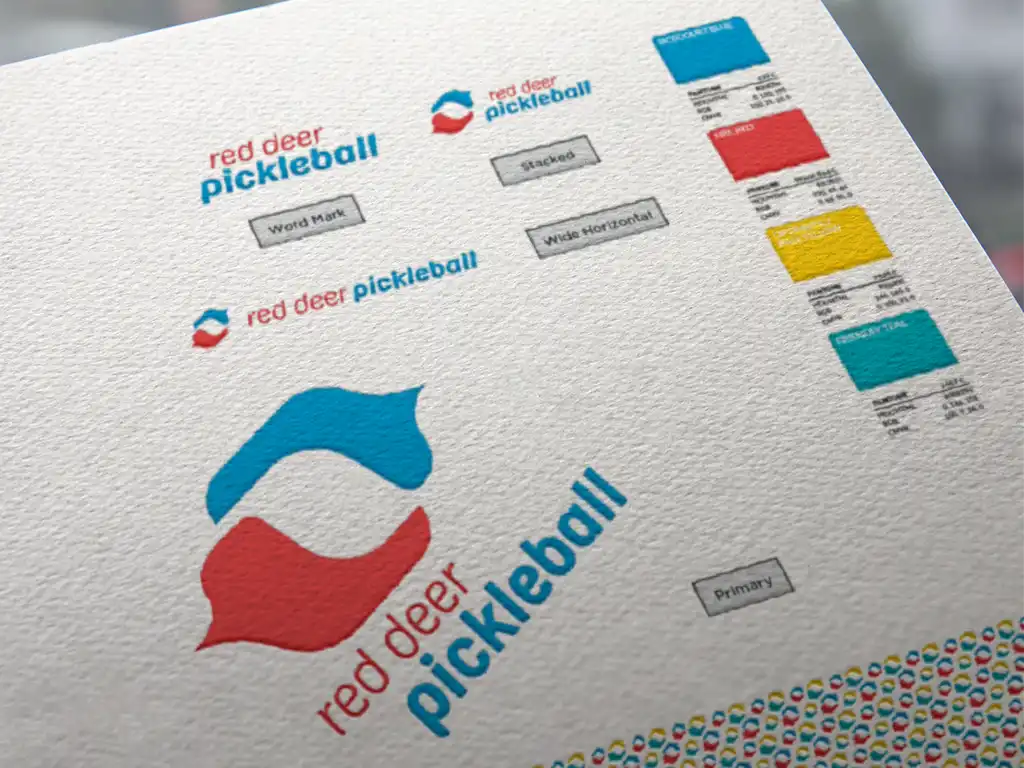
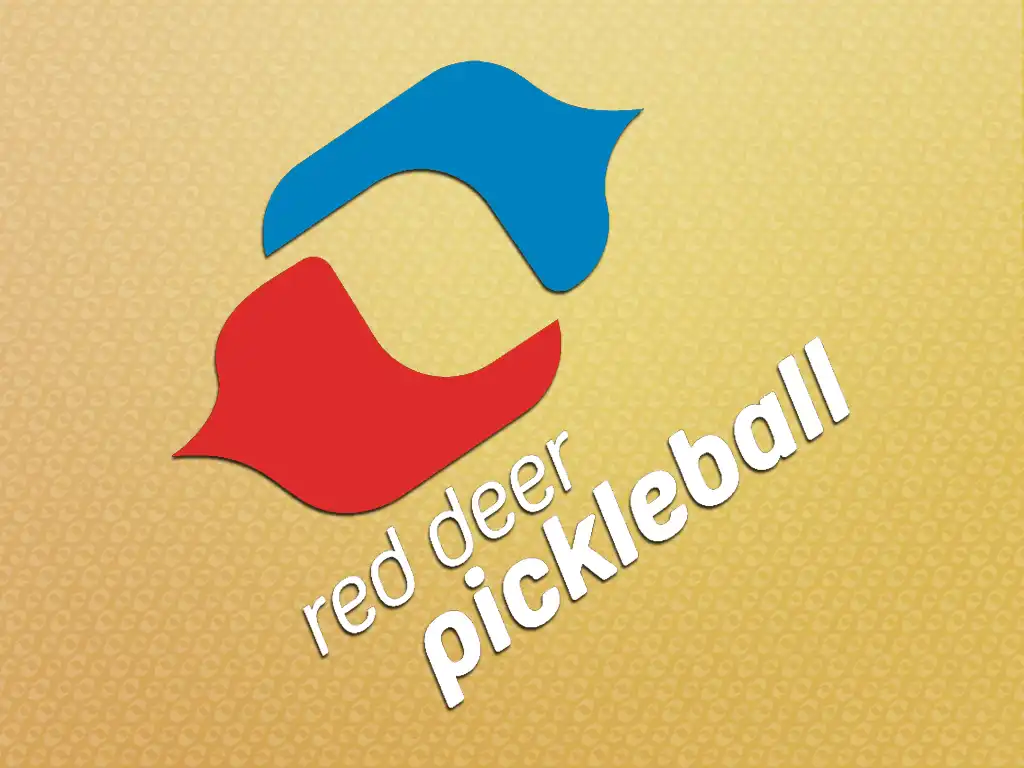
In Red Deer Pickleball’s case, this is a great logo. It will reproduce well and only has two ideas in it. The post match paddle-tap and a subtle nod to talk bubbles, or the social network that is the club. If this is all they received, They could be pleased, but not move many items forward.
Brand: A Brand is a System, Not a Signature
A brand system answers the questions that usually cause you stress:
- What colors should we use on this flyer?
- What font do we use for this proposal?
- How should we sound when we post an update?
Instead of starting from scratch every time you need to create something, you just follow the system. It expands your story outward, so you don’t have to struggle to compress it into a tiny logo.
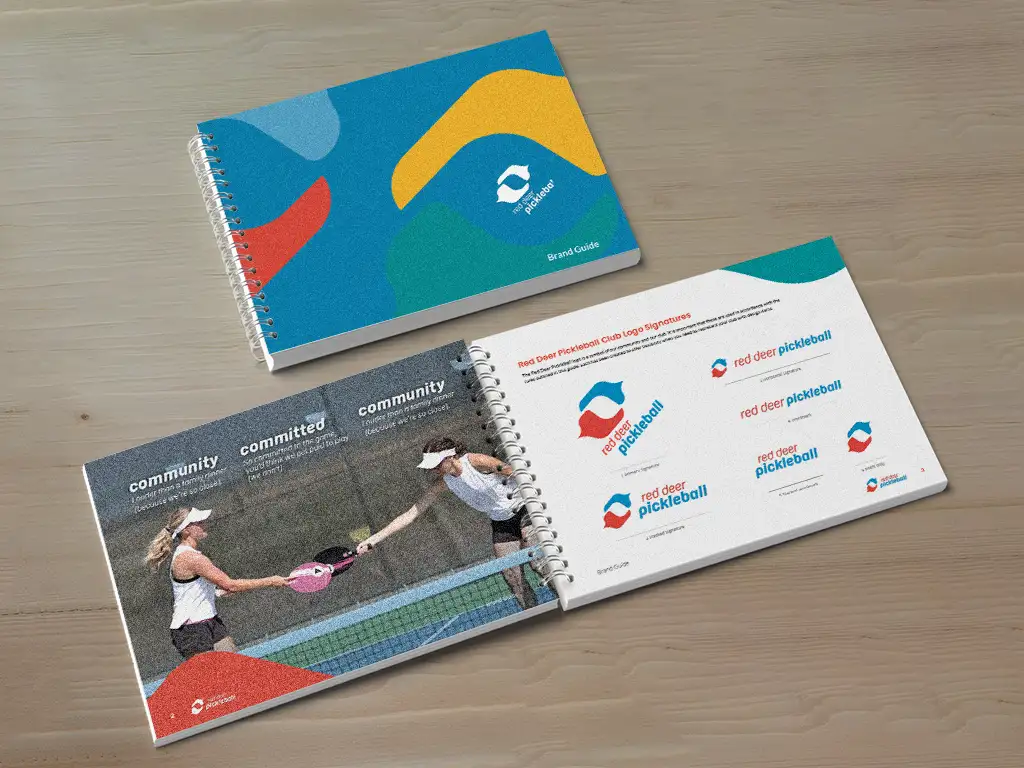
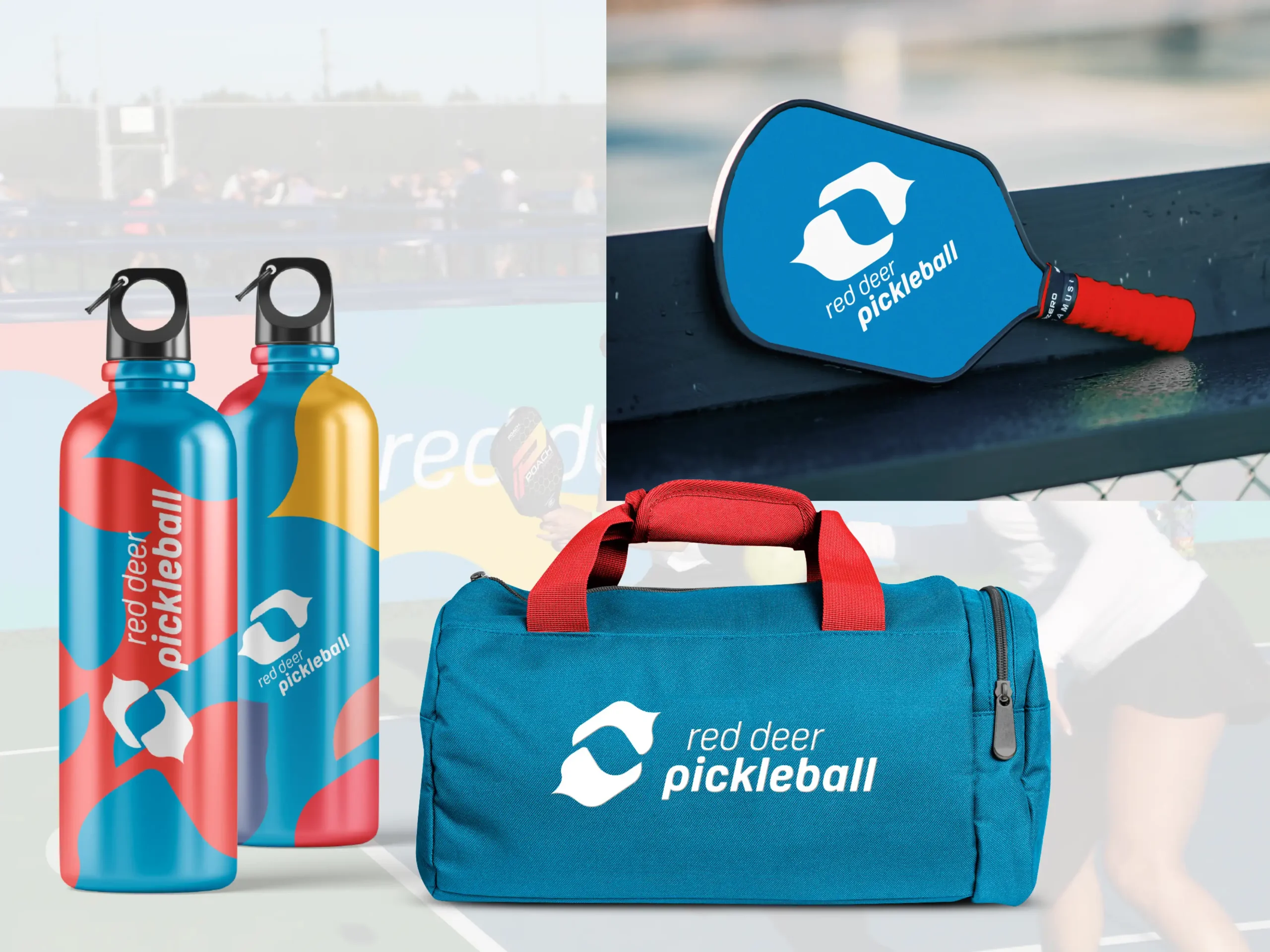
Red Deer Pickleball in fact, received many logo layouts, thinking through applications they may need. The brand standards document is one of the most beautiful I have done and … that WATER BOTTLE!
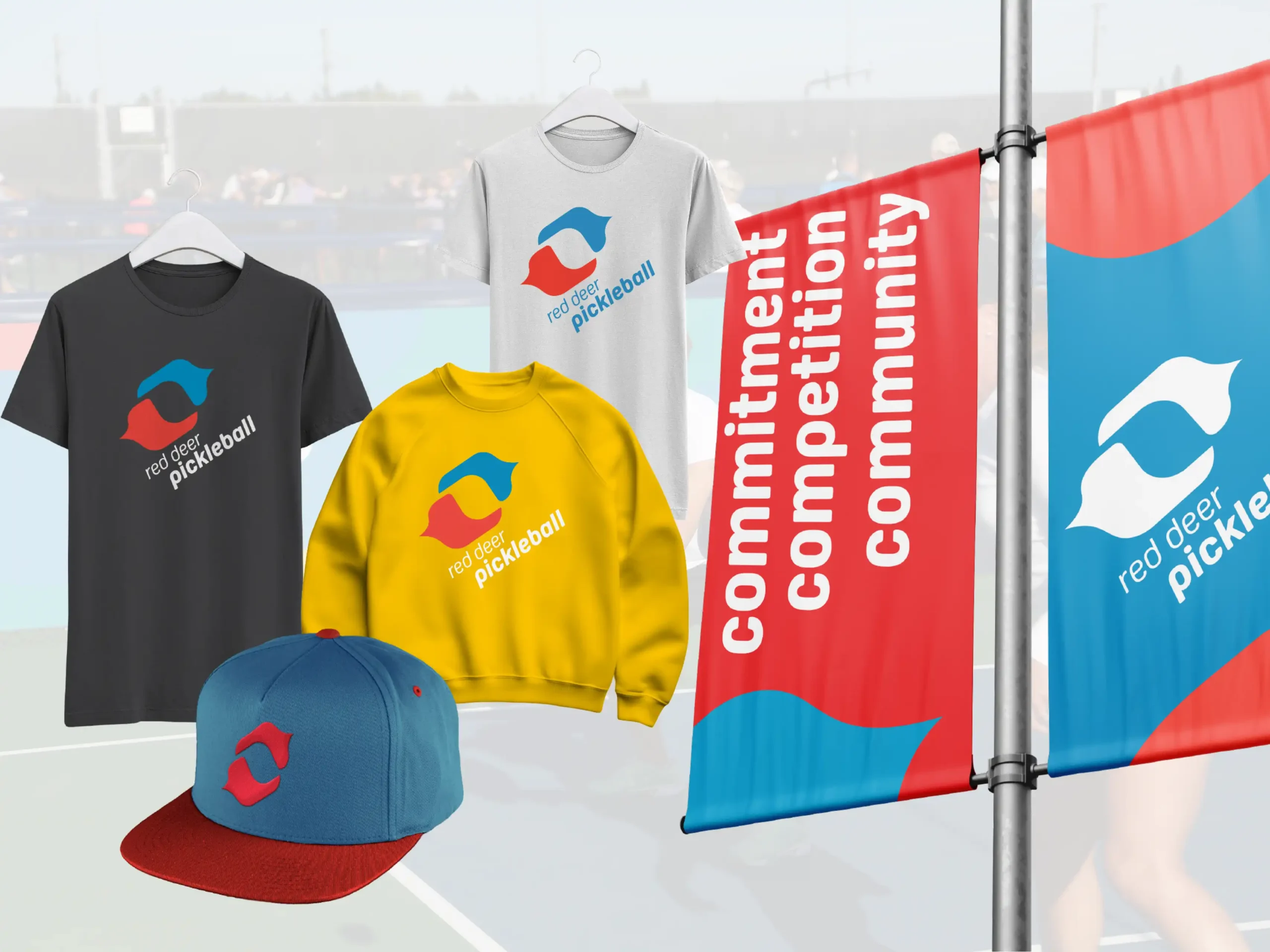
Logo vs Brand DeliverablesA Comparison
| Feature | Just a Logo | A Brand System |
|---|---|---|
| The Asset | One visual mark | A full kit (Primary, secondary, & logo variations) |
| Decision Making | You guess every time | The system makes the choice easier for you |
| Consistency | Drifts over time | Automatic (follow the rules) |
| Application | You’re on your own | Examples and rules provided |
| The Result | A file | A system |

The Hidden Cost of “Just a Logo”
You end up over-designing the logo or going through endless revisions because you’re trying to make one mark do the job of an entire identity. Once you have a brand foundation, the logo is just one piece of the puzzle. This makes your day-to-day work faster and much less frustrating.
Don’t Overload The Message
You might feel the urge to make your logo “say it all.” You may try to cram every service and value into one icon. You should avoid this. When you overload a logo, it becomes complex and hard to reproduce. Meaning doesn’t live in a mark; it lives in context. Trying to tell your whole story through one icon is like trying to hammer a nail with pliers—it’s simply the wrong tool for the job.
The Value of a Brand System
- Efficiency: Stop debating font sizes and hex codes. With the rules already written, you can execute quickly and move on.
- Consistency: Look professional across every touchpoint—from Instagram to signage—without having to micromanage the details.
- Availability: No more hunting for files. You’ll have a toolkit of files and variations ready for any situation.
- Clarity: A system defines how your business acts and speaks, eliminating the “identity crisis” of how to present new projects.
- Equity: A cohesive brand is a tangible asset. If you ever sell, an established “operating system” is worth significantly more than just a name.

A logo is only as strong as the brand behind it.
At Redpoint, we don’t just want to hand you a file and wish you luck. Our focus is on building a cohesive system that allows your identity to actually work for you.
Your logo identifies you, but your brand defines the rules. When you build the system first, the “what color should this be?” and “does this look right?” questions disappear. Your creative decisions become guided instead of improvised.
Build a system once, and give yourself the gift of a more stress-free day.